Markets Rally on Geopolitical Relief, But Inflation Lingers

Market Recap for the Week of April 6, 2026
It was a volatile but ultimately very positive week for markets.
Stocks traded sideways early in the week as geopolitical tensions escalated, with the U.S. issuing strong warnings toward Iran. However, in a rapid turn of events, a ceasefire agreement was announced just hours before a critical deadline. Markets responded immediately and decisively.
Equities rallied across the board following the announcement, and those gains held through the remainder of the week. The S&P 500 rose 3.58%, while emerging markets surged 6.25%, for the full week.
While the ceasefire has eased immediate concerns, uncertainty remains. The general consensus is that tensions have not fully resolved—but the worst-case scenario may now be off the table.
Oil prices declined following the announcement but remain elevated at approximately $95 per barrel, well above the sub-$60 levels seen at the start of the year. This sharp increase continues to have meaningful economic implications. Some of that impact is already showing up in the data.
The Consumer Price Index (CPI) rose 0.9% in March, driven almost entirely by higher energy costs. While this was largely expected given the spike in oil prices, it still represents a headwind for consumers. If oil remains near current levels, inflationary pressures could persist in the near term.
“Markets rallied on relief, but elevated oil prices continue to pose an inflation risk.”
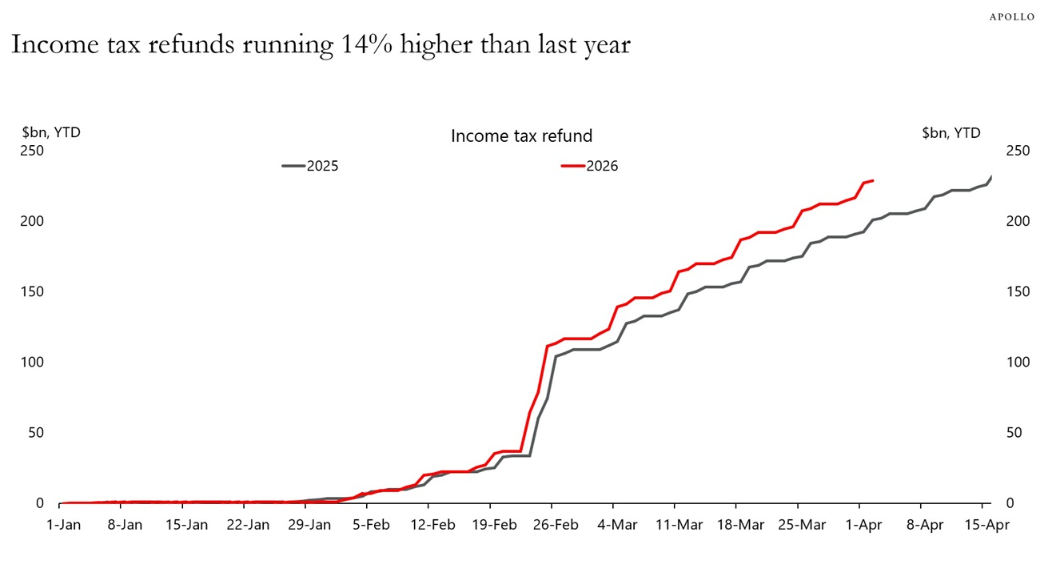
Chart of The Week
Despite the inflation backdrop, there is a notable offsetting positive: fiscal stimulus.
This week’s chart, sourced from Apollo Asset Management, highlights a meaningful increase in projected tax refunds for 2026 compared to 2025. In effect, while inflation may weigh on consumers in the early part of the year, higher tax refunds could provide a supportive tailwind to spending.
The commentary in this blog is for informational purposes only and should not be taken as personalized investment advice
Sources: US Treasury, Haver Analytics, Apollo Chief Economist