When Boring Wins

Market Recap for the Week of February 2, 2026
It was a somewhat volatile week for U.S. stocks. As of Thursday, the S&P 500 was down roughly 2% for the week and the Nasdaq had fallen nearly 4%. Markets recovered some ground on Friday, however, and the Dow Jones Industrial Average even notched a fresh all-time high. Of the three major U.S. indexes, the Dow was the least affected by last week’s pullback.
International equities and small-cap stocks continue to lead the way in 2026. Small caps, as measured by the S&P 600, are up approximately 10% year-to-date, compared to less than 2% for large caps (S&P 500). After years of large-cap dominance, it’s notable to see performance broadening out.
Perhaps most surprising: Technology is the worst-performing sector in the S&P 500 year-to-date, down about 2%. Meanwhile, Energy is on fire with a gain of roughly 19%, followed by Materials, Consumer Staples, and Industrials. In other words, the “boring” sectors are finally having their moment, while many of the high-flying AI names take a well-earned breather.
“In a surprising shift, technology is the worst-performing sector year-to-date—while Energy and other “boring” sectors are stealing the spotlight.”
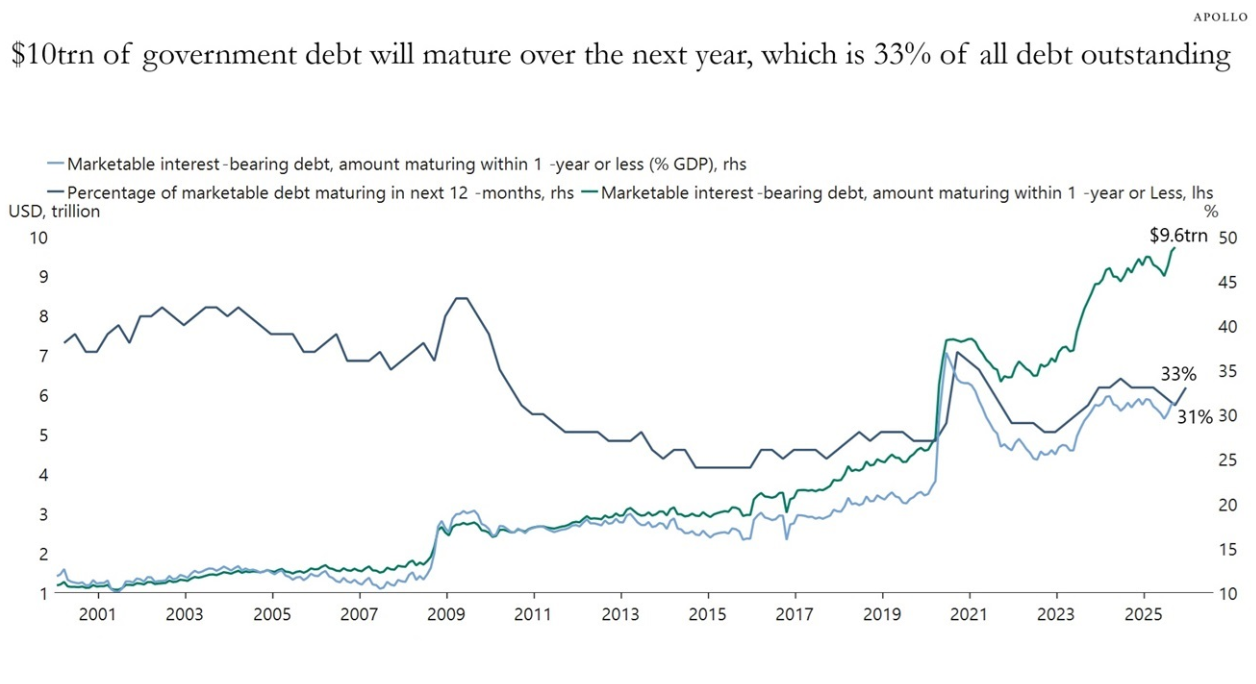
Chart of The Week
This week’s chart, courtesy of Apollo Asset Management, highlights that nearly $10 trillion of U.S. government debt is set to mature over the next year. With ongoing large federal deficits, that debt will need to be refinanced — and likely at interest rates higher than when much of it was originally issued.
Total net interest on the federal debt approached $1.25 trillion last year. Given the current rate environment and refinancing needs, 2026 could very well bring another record. While this isn’t an immediate crisis, it is a structural headwind worth watching as higher interest costs compete with other federal priorities.
The commentary in this blog is for informational purposes only and should not be taken as personalized investment advice
Sources: US Department of Treasury, Macrobond, Apollo Chief Economist