A Volatile Week, But Still a Strong Year

Market Recap for the Week of November 17, 2025
It was another negative week for U.S. stocks, with the S&P 500 falling a little more than 1.5%. International stocks declined as well, dropping close to 2%. Bonds, on the other hand, had a solid week, gaining 0.39% based on the Barclays Aggregate Bond Index.
The biggest loser last week was cryptocurrency. Bitcoin fell just over 8%, and Ethereum was down a similar amount. This pushed Bitcoin back below $90,000 and into negative territory for the year.
Nvidia reported earnings on Wednesday, and while the company posted strong numbers, the stock didn’t respond positively. Instead, it slid more than 8% over the following two days.
Despite these declines, the S&P 500 is still only about 4% below its all-time high—nowhere near correction territory. This is normal market volatility. That doesn’t mean things can’t get worse, but for context, U.S. stocks are still up double digits for the year. All things considered, that’s a strong year.
The long-delayed September jobs report was released once the government reopened. The U.S. economy added 119,000 jobs for the month, while the unemployment rate ticked up from 4.3% to 4.4%. Overall, the report came in better than expected.
“This is normal market volatility, not correction territory—and U.S. stocks remain up double digits for the year.”
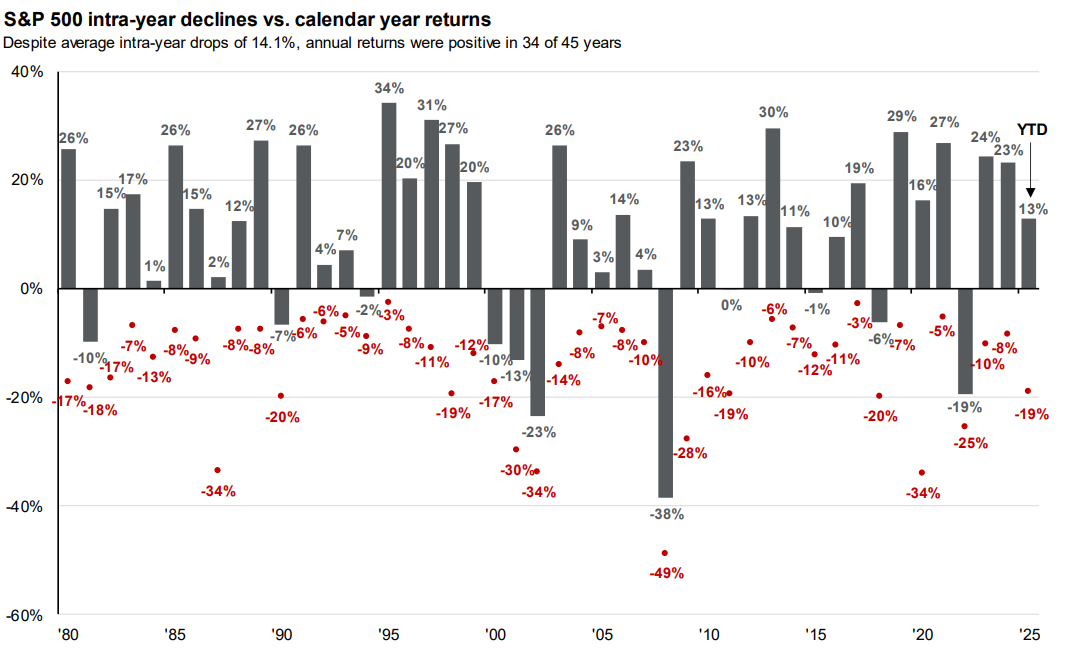
Chart of The Week
This week’s chart (from the JPMorgan Guide to the Markets) is a great reminder that volatility is completely normal. Each red dot shows the largest intra-year drop for U.S. stocks, while the gray bars show where the market finished that year. The takeaway: the market falls an average of about 14% at some point each year, yet still posts positive returns 75% of the time over the last 45 years.
To us, those are pretty good odds—so long as investors can ride out the year’s ups and downs.
The commentary in this blog is for informational purposes only and should not be taken as personalized investment advice
Sources: FactSet, Standard & Poor’s, J.P. Morgan Asset Management.
Returns are based on price index only and do not include dividends. Intra-year drops refers to the largest peak-to-trough decline during the year. Returns shown are calendar-year returns from 1980 to 2024, over which the average annual return was 10.6%. Past performance is no guarantee of future results. Guide to the Markets – U.S. Data are as of November 20, 2025.