Oil’s Wild Week

Market Recap for the Week of March 9, 2026
Markets experienced significant volatility last week, particularly in the oil futures market. Oil prices briefly surged above $110 per barrel at the market open on Monday, before falling to $77 by Tuesday and then rebounding to nearly $100 by Friday. The ongoing conflict involving Iran is the primary driver behind these dramatic swings. Year to date, oil prices have risen nearly 70%.
The sharp increase in oil prices is not encouraging from an inflation perspective. The most recent inflation report showed prices rising 0.3% in February, though this reading does not yet reflect the recent surge in energy prices. We also received a revised estimate for fourth-quarter GDP, which showed the economy grew at an annualized rate of 0.7% in Q4 2025, down from the initial estimate of 1.4%.
From a sector standpoint, energy stocks continue to lead the market and are now up 29% for the year. Financials, Consumer Discretionary, and Technology have been the weakest performers. Meanwhile, the bond market is essentially flat year to date. Typically, periods of geopolitical uncertainty lead investors to seek safety in bonds. However, because the current conflict could further accelerate inflation, investors appear concerned that inflationary pressures may outweigh the traditional defensive benefits of government bonds.
“As oil prices surge, inflation—not safety—is becoming the market’s primary concern.”
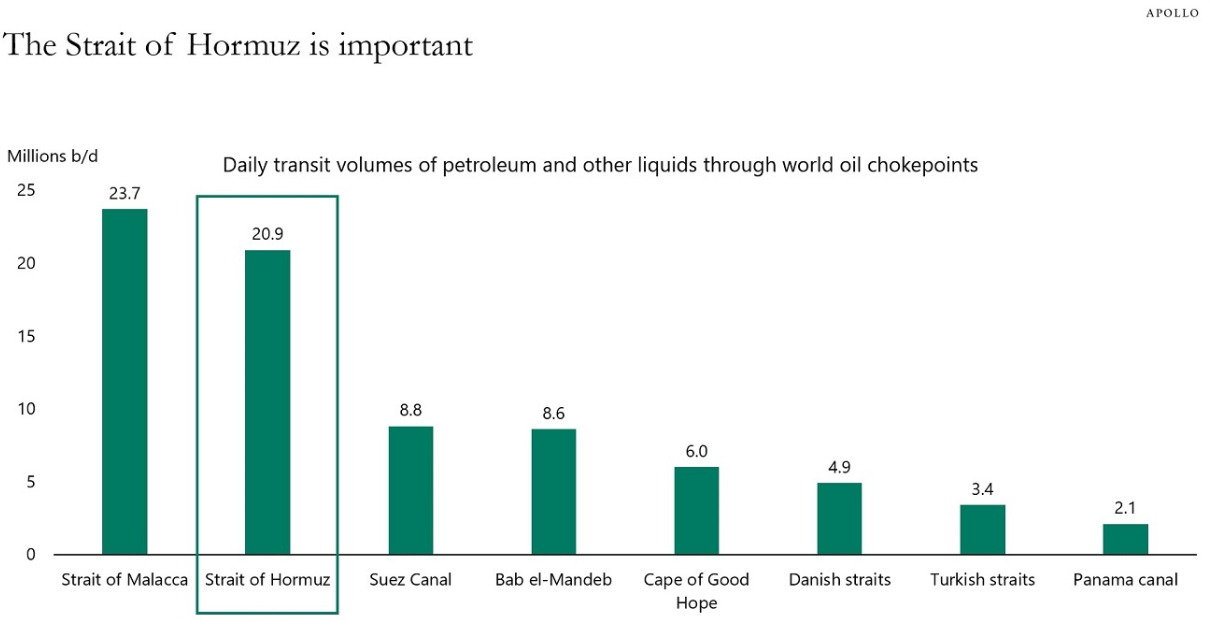
Chart of The Week
One of the primary reasons for the recent surge in oil prices is Iran’s restriction of oil tanker traffic through the Strait of Hormuz. This week’s chart, sourced from Apollo Asset Management, highlights the significant volume of oil that normally passes through this critical shipping route. Approximately 20% of the world’s oil supply moves through the strait each day.
As long as the conflict persists, disruptions in this passageway are likely to continue. As a result, oil transportation risks remain elevated, and oil prices may remain under upward pressure.
The commentary in this blog is for informational purposes only and should not be taken as personalized investment advice
Sources: US Energy Information Administration (EIA) analysis, based on Vortexa tanker tracking and Panama Canal, Apollo Chief Economist